
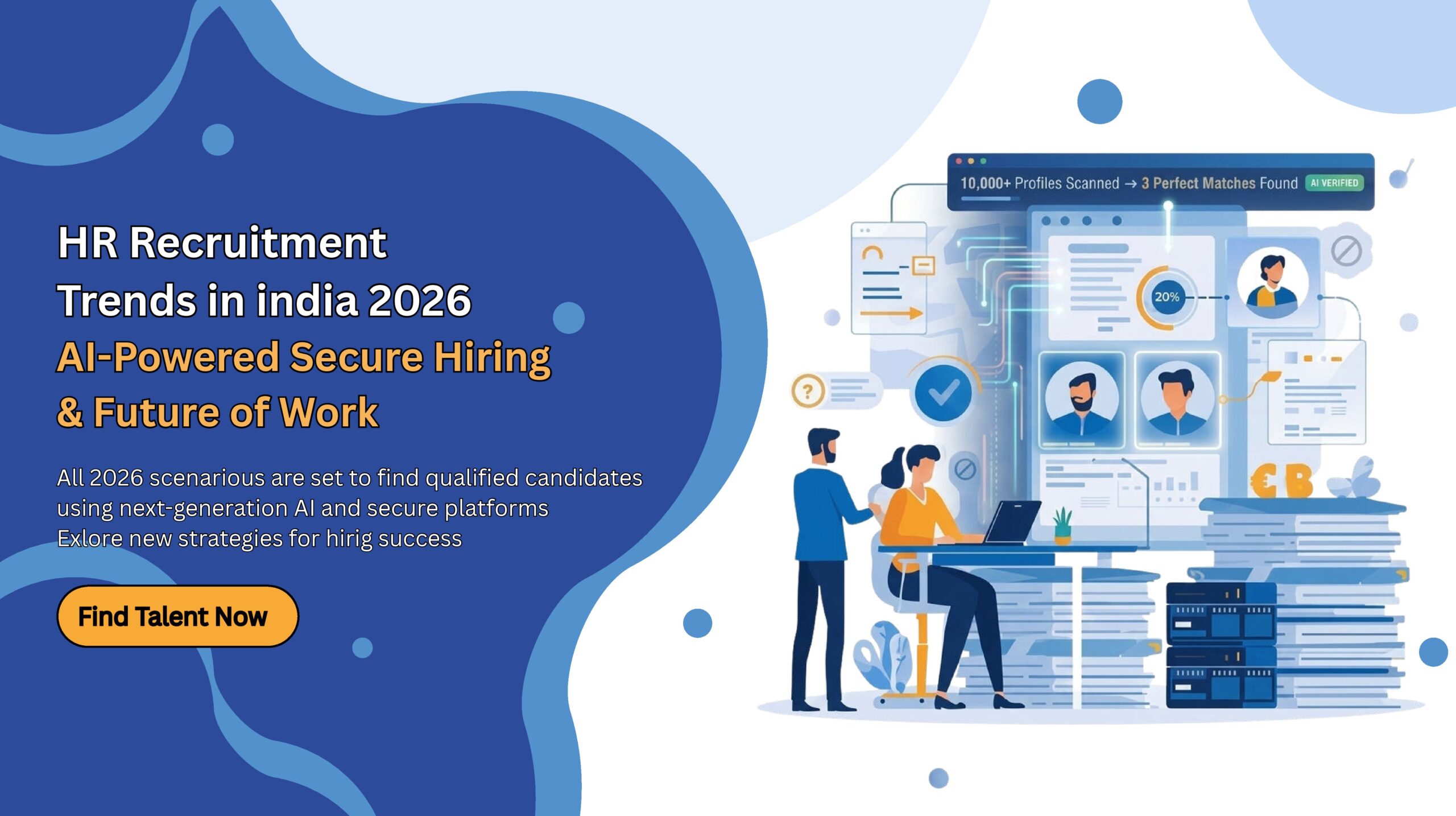
You’re getting more job applications than ever. And yet, you still can’t find the right person.
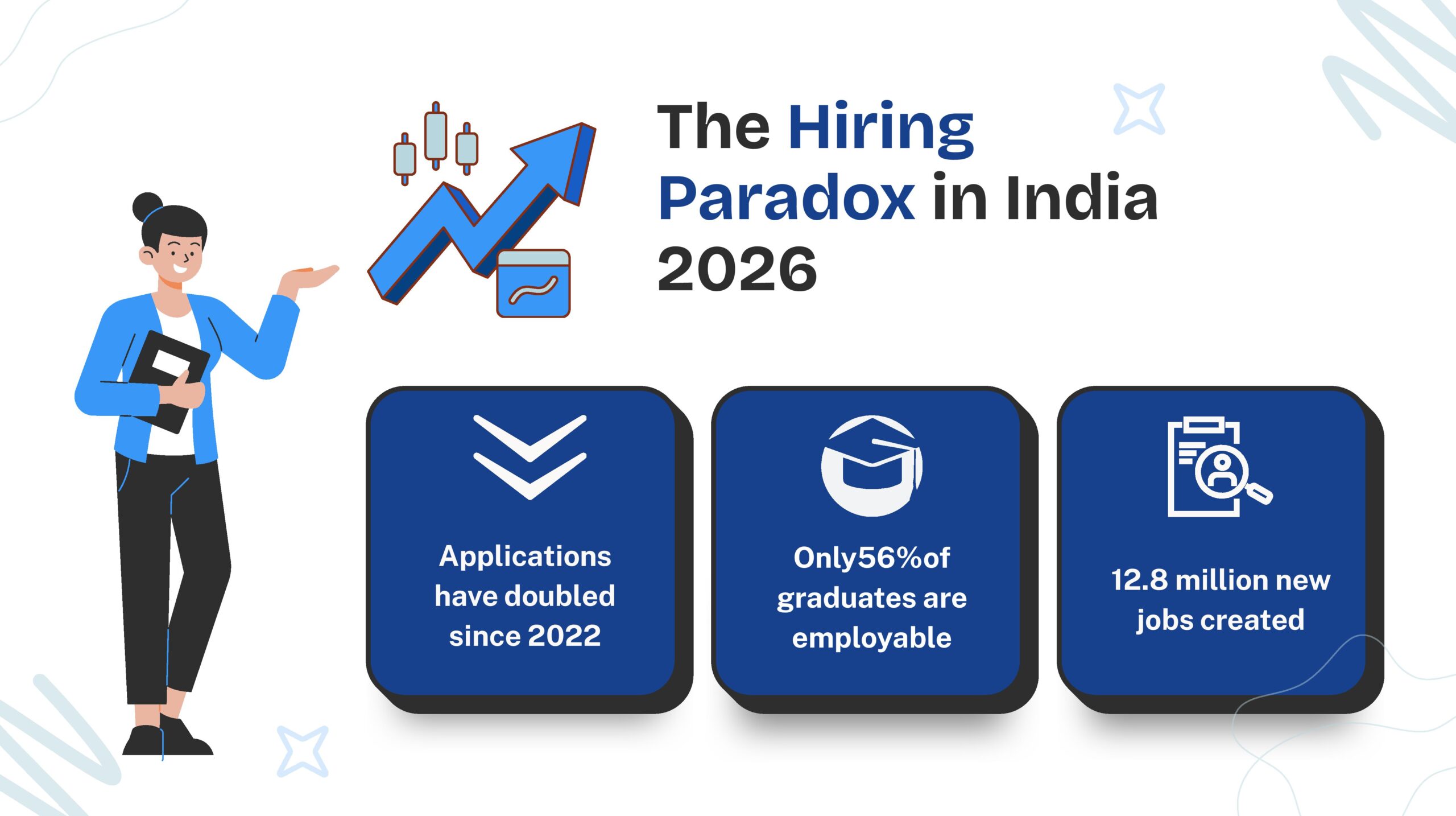
This is not just your problem. It is happening across India. Applications per role have doubled since 2022, but 74% of recruiters say finding qualified candidates has become difficult.
More resumes, fewer matches.
Here’s why: India is expected to add 12.8 million new jobs this year; that’s a massive 23% jump from last year. But only 56% of graduates are employable, according to the India Skill Report 2026. The rest have degrees, but not the right skills. This means HR teams from MSMEs, startups, and global companies are all competing for top talent in areas like AI, cloud computing, EVs, and fintech.
What’s YOUR biggest hiring headache right now?
Skill gaps?? Application Overload?? Fresher quality??
At WeHYB, our end-to-end recruitment solutions and staff augmentation services help MSMEs, startups, and enterprises capitalise on this transformation.
Drop your biggest 2026 hiring worry in the comments!
Gone are the days of “degree + 3 years exp.”
In 2026, the first question employers are asking is
Can this person do the job? Can they learn fast? Can they work well with others even when things are uncertain?
Skills-First Hiring represents a fundamental shift from degree-centric evaluation to practical competency assessment, prioritizing AI proficiency, cybersecurity, cloud architecture, and soft skills like adaptability. It doesn’t mean degrees don’t matter. It means a degree without the right skills won’t get you far.
As a recruiter, you are not just matching CVs to JDs anymore but helping companies understand what skills they actually need and helping candidates see what they need to develop.
Flexi-staffing is growing at 18-20% annually, helping companies reduce costs by 20-30%.
AI handles 75% of the first round of screening, and companies plan their workforce needs 6-12 months in advance. It’s all about hiring the right people, not just more people.
76% of recruiters anticipate white-collar expansion in early 2026 (Naukri JobSpeak Survey of 2300+ firms), led by retail (91% intent) and e-commerce (90%).
Flexi-staffing is expanding at 18-20% CAGR, helping companies reduce fixed labour costs by 20-30%. It is ideal for scaling startups via IT staff augmentation solutions.
Thanks to end-to-end hiring solutions, the hiring cycles are reduced from 90 days to 45 days, aligning perfectly with 73% fresher hiring intent.
Tier-2 cities (Jaipur, Visakhapatnam, and Coimbatore) expand talent pools by 15-20%. Also, GCCs are driving 10-12% growth beyond metros.
If your recruiting strategy is still metro-only, this is the single biggest opportunity you’re leaving on the table.
Aon Survey 2026 forecasts 9.1% average hike across industries, with automotive/EVs at the top with 10.1% (highest since 2023).
32% of Gen Z professionals explore new industries, and entrepreneurship titles are up 25% as the gig economy gains momentum.
AI/cloud certifications via platforms boost employability 3x, especially for women, who are outpacing men for the first time.
Workplace flexibility is in demand. 72% professionals seek new opportunities, prioritising remote/hybrid mode, though only 16% of the job seekers feel prepared (LinkedIn Economic Graph).
Quick Poll: What’s YOUR top talent attraction challenge??
A. Salary Competition
B. Work Flexibility
C. Career Growth
“Cast your vote in the comments”
| Challenge | Market Impact | Proven Solutions | Expected ROI |
|---|---|---|---|
| Critical Skills Gap | 68% firms affected; 51% lack AI talent | AI-powered assessments + certification partnerships | 25% faster time-to-hire |
| Application Overload | 2× volume per role since 2022 | Advanced ATS + predictive analytics | Drop-off reduction |
| Fresher Employability | Only 56% employable graduates | Pre-hire skills evaluation | Improved retention |
| Mid-Level Scarcity | 11% hiring targets 4–7 years of experience | Strategic workforce planning and referrals | Salary competitiveness |
| Retention Risk | 72% professionals are job-seeking | Flexible staffing + upskilling programs | Up to 54% enhanced employee loyalty |
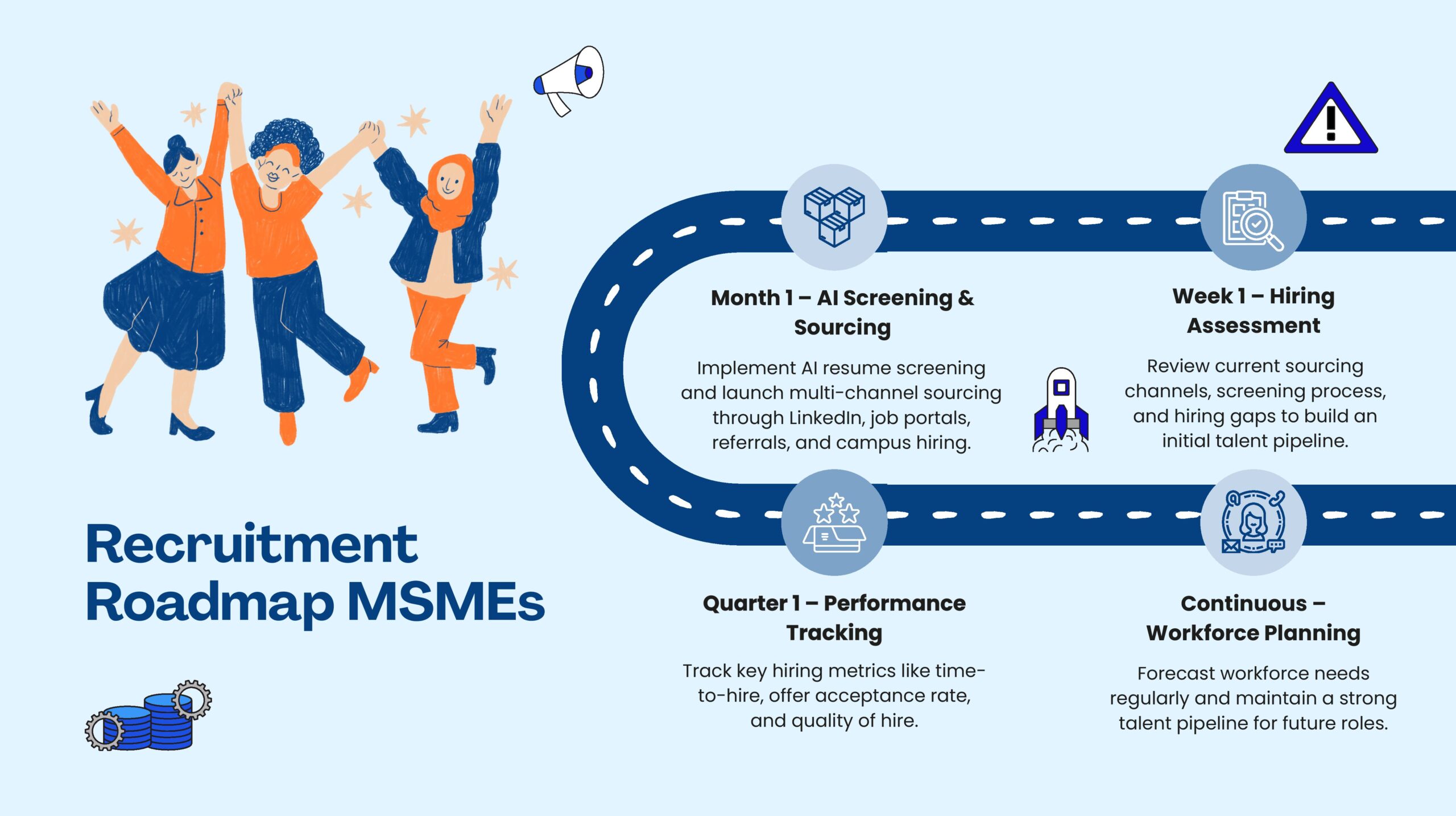
Week 1: Assess your current sourcing channels, screening efficiency, and conversion rates. The goal is to identify gaps and build an initial pre-qualified talent pipeline for high-demand roles like AI and cloud.
Month 1: Now, deploy AI-powered screening, skill-based assessment and targeted multi-channel sourcing campaigns. Target hiring campaigns across LinkedIn, Naukri (or any other relevant/niche job portals), referrals, and campus drives (targeting fresher roles).
Quarter 1: Track key metrics—time-to-hire, offer acceptance, and quality-of-hire—and identify top-performing searching channels. See what is working!
Continuous: Implement quarterly workforce forecasting, and keep building your talent pool for key roles.
India’s job market is booming right now, but for MSMEs, competing for skilled talent feels harder than ever. While millions of new jobs are being created, most businesses find it hard to locate candidates with the right skills.
So the question is, how do smaller businesses hold their own against the big guys and still hire the right people, fast and without burning their budget?
The answer is to use smarter, faster, and more strategic recruitment practices.
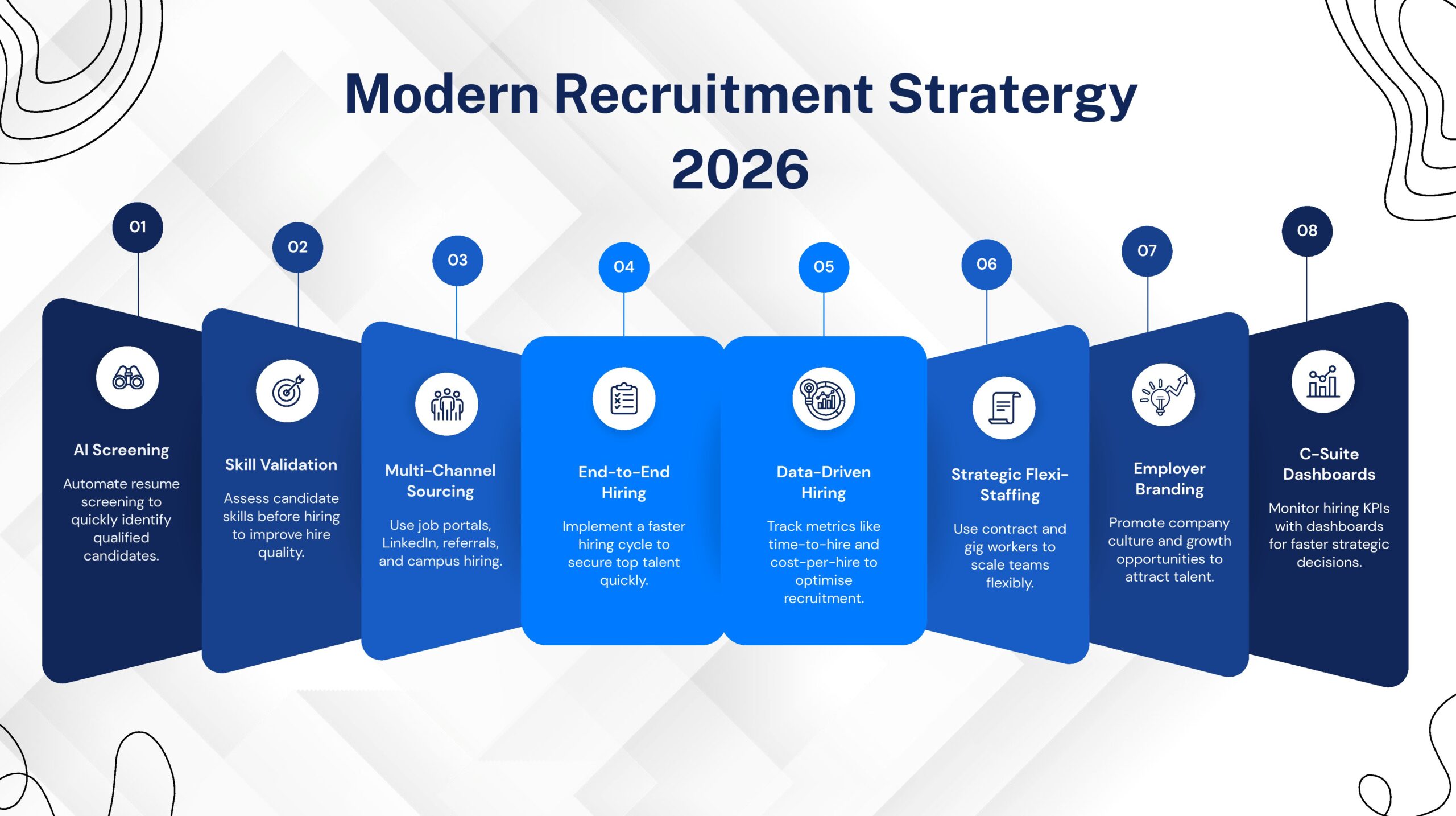
Let AI handle the first round. Automate 75% of initial filtering with AI tools to quickly spot candidates with relevant skills. You save hours, skip the pile of “maybes,” and spend time only on the top 20-30% of qualified candidates.
Validating the skills before hiring improves hire quality by 30-35%. Use a structured skill assessment. It reduces bad hires and boosts first-year employee performance and retention.
It increases the hiring success by 40%. Use a balanced mix: –
A. 40% job portals (high volume)
B. 30% LinkedIn (high quality)
C. 20% referrals (high conversion)
D. 10% campus hiring (cost-effective)
Speeding up the hiring process helps secure top talent before competitors do. Implement a 45-day source-to-onboard cycle.
Track recruitment metrics; keep an eye on time-to-hire, cost-per-hire, and offer acceptance rate. Using data for hiring helps find bottlenecks and optimise recruitment. It improves hitting efficiency by 20-30%.
Hire contract and gig workers to adjust teams based on business needs. It offers more flexibility and helps in cost control.
Highlight career growth, skill development, and company culture. A strong employer brand builds candidate trust, attracts qualified candidates (up to 50% more), and reduces reliance on paid sourcing.
Create monthly dashboards tracking key KPIs against industry benchmarks. This approach allows for quicker, data-driven decisions. It improves hiring efficiency by 20-30% and keeps recruitment in line with business growth and market hiring trends.
Market Wildcard: Manufacturing Policy Boost
Government data shows that about 8.7 lakh were added in Q2 FY26. This reflects growth in the manufacturing and industrial sector, driven by policy changes.
Conclusion
India’s 2026 recruitment surge includes 73% fresher hiring intent, 12.8 million new jobs, and 11% growth in strategic hiring. This clearly favours agile, skills-focused recruiters.
While 84% of professionals feel unprepared and job competition has doubled, MSMEs that use AI-driven screening, flexible staffing, and a complete recruitment model will attract a larger share of top talent. With an average salary hike of 9.1% and strong demand in various sectors, timing is great for businesses to update their tired strategies steadily.
How prepared is your organisation for India’s 2026 hiring surge?
Share your top talent acquisition priorities and challenges in the comments.
Connect with WEHYB to explore our complete recruitment solutions, IT staff support, and workforce planning services. These are designed to help MSMEs hire faster, smarter, and more cost-effectively in a competitive market.
Subscribe to our blog for exclusive insights on data-driven strategic HR solutions and other HR compliances.
Comment “2026 READY” if your organisation is taking action this quarter.
© 2026 | All Rights Reserved. Wehyb Online Services LLP | Designed & Developed By Yugantar Media
Website security powered by MilesWeb